Thursday, May 30, 2019

Netflix says it would ‘rethink’ filming in Georgia if abortion law takes effect

Netflix’s chief content officer Ted Sarandos said the streaming service (which is spending billions of dollars on an ever-growing catalog of original content) will “rethink [its] whole investment in Georgia” if a recently signed abortion law goes into effect.

Sarandos’ statement was first published in Variety. The industry publication said it reached out to the major studios for comment on the issue, and it contrasted his position with a lack of response from The Walt Disney Company, WarnerMedia, Sony Pictures Entertainment, NBCUniversal, Viacom, Fox and Amazon Studios.

“We have many women working on productions in Georgia, whose rights, along with millions of others, will be severely restricted by this law,” Sarandos said. “It’s why we will work with the ACLU and others to fight it in court. Given the legislation has not yet been implemented, we’ll continue to film there, while also supporting partners and artists who choose not to. Should it ever come into effect, we’d rethink our entire investment in Georgia.”

This comes as the stars of two Netflix shows — Jason Bateman of “Ozark” and Alyssa Milano of “Insatiable” — have said they would stop filming in the state if the law takes effect.

Other filmmakers have taken the route of Ron Howard and Brian Grazer, who said they’ll proceed with plans to film their Netflix movie “Hillbilly Elegy” in Georgia while making a donation to the ACLU to fight the anti-abortion legislation. (Howard and Grazer also said they will boycott the state if the law takes effect.)

The law in question, which was signed by Georgia Governor Brian Kemp on May 7, prohibits abortion after the detection of a fetal heartbeat — something that usually happens after six weeks of pregnancy. It’s widely seen as part of a larger effort aimed at getting the Supreme Court to overturn or weaken the abortion protections established in Roe v. Wade.

Thanks to state tax incentives, Georgia has become a hub for film and TV, with productions bringing the state an estimated $2.7 billion in revenue in 2017.


from TechCrunch https://tcrn.ch/2WvJUU2

How to trigger FOMO among VCs, plus PMs, SoftBank, and cheese

Fundraising 101: How to trigger FOMO among VCs

Our media columnist Eric Peckham talked to a variety of successful founders on how they generate FOMO (i.e. fear of missing out) among VCs during their fundraises. While having a great deck and story is key to startup success, clearly there is also a bit of the dark arts required to go from intro email to term sheet.

We focused on a two-week period and set all the meetings for Thursday and Friday. From 7am into the evening, back-to-back pitches at all the firms in one area then the next area. That’s because partner meetings are on Mondays, so the Thursday and Friday conversations would lead to pitching the whole partnership the following Monday. We had a 24-hour rule: if we didn’t hear back from a fund in 24 hours, we crossed them off the list.

and

According to this CEO, Sequoia and Benchmark are the best at throwing entrepreneurs off their process in order to get ahead of the competition. Sequoia will typically arrange meetings for the morning so they can invite you back for a second meeting with more partners that same afternoon; Benchmark’s partners are quick to travel to wherever you are in the world and sell you on working together (with a term sheet at the ready).

Q&A with J Crowley, Head of Product at Airbnb Lux, on what makes a great PM

Our editor Jordan Crook did a great interview with J Crowley of Airbnb Lux and formerly of Foursquare, and the two of them discussed the opportunities and challenges of being a PM, how to deal with failure, and how to be a leader on a product team.


from TechCrunch https://tcrn.ch/2I60WyR

Palo Alto Networks to acquire container security startup Twistlock for $410M

At KubeCon last week in Barcelona, container security was a hot topic, so it shouldn’t come as a surprise that Palo Alto Networks announced today that it was buying container security startup Twistlock for $410 million.

The company also announced it was buying serverless security startup PureSec. It did not reveal the purchase price for this deal, but the pair of companies gives Palo Alto a set of tools for modern development approaches, as the meaning of securing applications and infrastructure changes.

Twistlock has raised a little over $63 million, according to Crunchbase data, so that price tag presumably gives its investors quite a nice rate of return, but Palo Alto probably sees what everyone else is seeing, and having a container security piece in its toolkit is going to be a highly valuable asset.

With a company like Twistlock in the fold, it not only gives them a container security platform, it’s also giving them the 120 employees with a lot of container security knowledge and 400 customers using that toolset, and that in itself may in some ways be even more valuable.

Developers have been moving to containers quickly over the last several years, and as with so many rapidly growing technologies, the security hasn’t necessarily kept up with the development of containerization in general. Companies like Twistlock and Aqua Security have been trying to build tools to change that. Both companies had a big presence at KubeCon last week.

Company CTO John Morello says his company works with the cloud native community to help define security standards, then builds that into the application. “Within Twistlock, we have literally 500-plus checks that cover the Center for Internet Security (CIS) benchmarks for Linux, for Docker, for Kubernetes and gives you that visibility. So you can see what the configuration state of your environment is, but we also give you a preventative capability. So if the environment is configured insecurely, then we won’t allow the application to be deployed,” Morello told TechCrunch in an interview at KubeCon last week.

Twistlock, which was founded in 2015, got into container security quite early, but the founders saw that this new way of developing software would require a new way of securing it. That’s partly because of the ephemeral nature of containers, but more because containerization brings with it a high level of automation, and when no humans are touching the process, it’s easier for hackers to insert themselves without anyone knowing it.

The company’s most recent funding round was a $33 million Series C investment last summer. As for PureSec, it had raised $10 million, according to Crunchbase.

Per usual, the acquisitions are subject to standard regulatory approvals and are expected to close in Palo Alto’s fiscal Q4.


from TechCrunch https://tcrn.ch/2woWAO2

Varjo’s XR-1 puts your eyes on the outside of its high-end VR headset

Varjo‘s VR headset was the best VR headset I had ever demoed; its dual display design with a micro-OLED sweet spot enabled insanely high-resolution views without requiring a supercomputer to power it. The company is looking to inject a bit more into the real world with its new developer kit that it announced today at the Augmented World Expo.

The XR-1, as it is being called, takes the headset and mounts a pair of cameras to the front plate, piping in high-def outside imagery into which it can inject real-time rendered content, leveraging the high-end GPU to which your headset is connected.

While devices like the Magic Leap One and HoloLens 2 focus on building nearly transparent display structures that allow users to see the real world with simulated imagery, pass-through mixed reality sends everything through external camera sensors, cutting the world off from a user’s naked eye but presenting a more precisely-blended version of AR.

The Finnish startup has raised more than $45 million in funding.

Transparent waveguide displays unsurprisingly have some shortcomings compared to static screens, something Varjo maintains makes their solution better for customers seeking the highest-quality imagery.

“The XR-1 can show mixed reality with true-to-life fidelity you can only achieve using video-pass-through. Lifelike mixed reality is quite literally impossible to achieve with optical-see-through systems like HoloLens,” Varjo co-founder Urho Konttori said in a statement.

Alongside the XR-1’s release, Varjo is also detailing a deepening partnership with Volvo, which has now invested directly into the company. Volvo is utilizing the headset to help test new vehicle types and interfaces inside a partially rendered environment.

Apple’s 2017 purchase of Vrvana showed that there was some interest in showcasing how this passthrough mixed reality headset solution could bolster the technology, though Apple has already been investing heavily in pass-through mixed reality, just on its iPhones rather than headsets.

The XR-1 camera module is working with two 12-megapixel cameras piping what they see to your eyes in less than 15 milliseconds.

Varjo is a much more expensive solution than the already pricey options from Magic Leap and HoloLens; the XR-1 will likely see less usage on factory floors due to its form factor and is more likely suited for design and visualization needs. Given the base of the headset is the VR-1, needless to say it won’t be too difficult to switch between modes.

The company has yet to detail how much the XR-1 will cost when it launches sometime in the second half of this year, but the VR-1 retails for $5,995, so chances are it will be a tad costly.


from TechCrunch https://tcrn.ch/2VWhQ7X

Fundraising 101: How to trigger FOMO among VCs

Let’s go beyond the high-level fundraising advice that fills VC blogs. If you have a compelling business and have educated yourself on crafting a pitch deck and getting warm intros to VCs, there are still specific questions about the strategy to follow for your fundraise.

How can you make your round “hot” and trigger a fear of missing out (FOMO) among investors? How can you fundraise faster to reduce the distraction it has on running your business?

“You’re trying to make a market for your equity. In order to make a market you need multiple people lining up at the same time.”
Unsurprisingly, I’ve noticed that experienced founders tend to be more systematic in the tactics they employ to raise capital. So I asked several who have raised tens (or hundreds) of millions in VC funding to share specific strategies for raising money on their terms. Here’s their advice.

(The three high-profile CEOs who agreed to share their specific playbooks requested anonymity so VCs don’t know which is theirs. I’ve nicknamed them Founder A, Founder B, and Founder C.)

Have additional fundraising tactics to share? Email me at eric.peckham@techcrunch.com.

Table of Contents

You need to create a market for your shares

“You’re trying to make a market for your equity. In order to make a market, you need multiple people lining up at the same time.”

That advice from Atrium CEO Justin Kan (a co-founder of companies like Twitch and former partner at Y Combinator) was reiterated by all the entrepreneurs I interviewed. Fundraising should be a sprint, not a marathon, otherwise the loss of momentum will make it more difficult.


from TechCrunch https://tcrn.ch/2XgufVY

Waymo is bringing its self-driving trucks back to Arizona

Waymo, the autonomous vehicle company under Alphabet, is bringing its self-driving trucks back to Arizona.

The company’s autonomous Chrysler Pacifica hybrid vehicles, which are used in its Waymo One ride-hailing service, are a common sight on public streets in Chandler and other suburbs of Phoenix. But its self-driving Class 8 big rig trucks haven’t been in Arizona for more than a year.

Waymo integrated its self-driving system into Class 8 trucks and began testing them in Arizona in August 2017. The company stopped testing its trucks on Arizona roads sometime later that year.

Those early Arizona tests were aimed at gathering initial information about driving trucks in the region, according to Waymo. This new round of testing is at a more advanced stage in the program’s development.

Testing will be conducted on freeways around the metro Phoenix area and will expand over time, according to Waymo. The company wouldn’t share details of how many autonomous trucks it has in its total fleet, how many will be in Arizona or when it will broaden its testing area outside of metro Phoenix.

The company said it will be testing with both empty trucks and with freight. However, the freight will be for testing purposes only and not part of a commercial business.

The self-driving trucks have two trained safety drivers who can take over if needed.

Waymo has been testing its self-driving trucks in a handful of locations in the U.S., including Arizona, the San Francisco area and Atlanta. In 2018, the company announced plans to use its self-driving trucks to deliver freight bound for Google’s data centers in Atlanta.

Waymo self-driving trucks will be sharing Arizona freeways with at least one other company — TuSimple, which runs an autonomous route (with safety drivers) between Tucson and Phoenix along Interstate 10.

Self-driving trucks are part of Waymo’s broader business strategy, which also includes launching a ridesharing service and, one day, even licensing autonomous technology to vehicle manufacturers.


from TechCrunch https://tcrn.ch/2YYIjDX

How we scaled our startup by being remote first

Startups are often associated with the benefits and toys provided in their offices. Foosball tables! Free food! Dog friendly! But what if the future of startups was less about physical office space and more about remote-first work environments? What if, in fact, the most compelling aspect of a startup work environment is that the employees don’t have to go to one?

A remote-first company model has been Seeq’s strategy since our founding in 2013. We have raised $35 million and grown to more than 100 employees around the globe. Remote-first is clearly working for us and may be the best model for other software companies as well.

So, who is Seeq and what’s been the key to making the remote-first model work for us?  And why did we do it in the first place?

Seeq is a remote-first startup – i.e. it was founded with the intention of not having a physical headquarters or offices, and still operates that way – that is developing an advanced analytics application that enables process engineers and subject matter experts in oil & gas, pharmaceuticals, utilities, and other process manufacturing industries to investigate and publish insights from the massive amounts of sensor data they generate and store.

To succeed, we needed to build a team quickly with two skill sets: 1) software development expertise, including machine learning, AI, data visualization, open source, agile development processes, cloud, etc. and 2) deep domain expertise in the industries we target.

Which means there is no one location where we can hire all the employees we need: Silicon Valley for software, Houston for oil & gas, New Jersey for fine chemicals, Seattle for cloud expertise, water utilities across the country, and so forth. But being remote-first has made recruiting and hiring these high-demand roles easier much easier than if we were collocated.

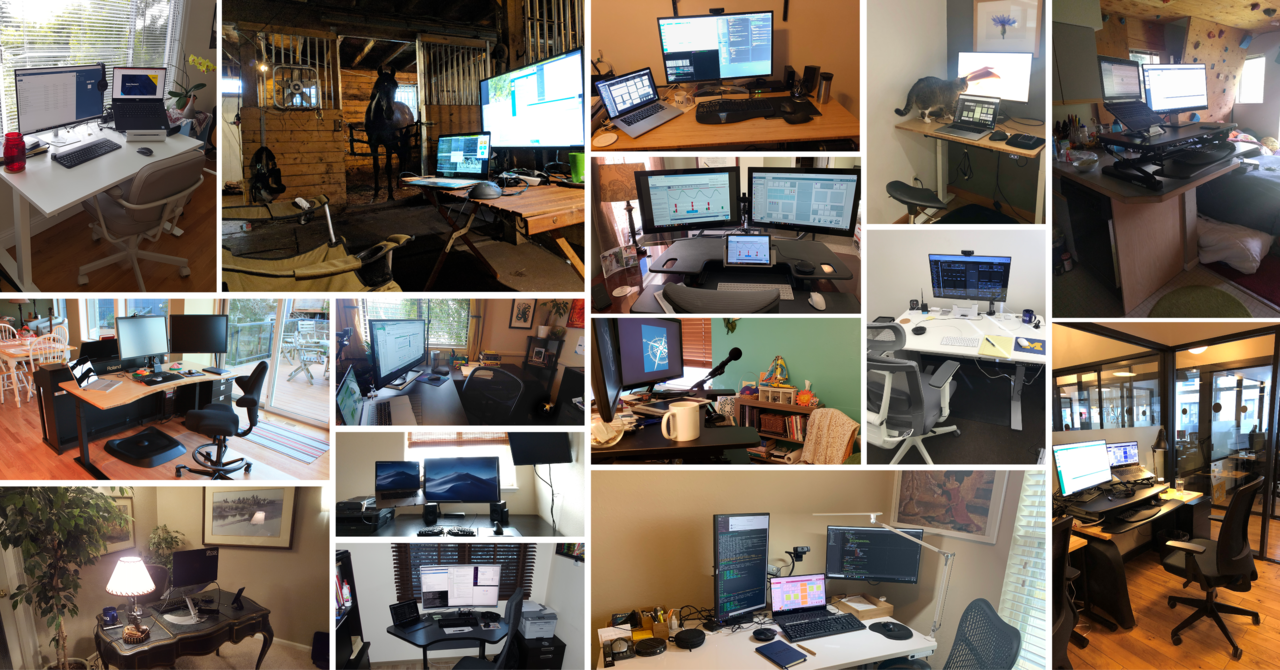
Image via Seeq Corporation

Job postings on remote-specific web sites like FlexJobs, Remote.co and Remote OK typically draw hundreds of applicants in a matter of days. This enables Seeq to hire great employees who might not call Seattle, Houston or Silicon Valley home – and is particularly attractive to employees with location-dependent spouses or employees who simply want to work where they want to live.

But a remote-first strategy and hiring quality employees for the skills you need is not enough: succeeding as a remote-first company requires a plan and execution around the “3 C’s of remote-first”.

The three requirements to remote-first success are the three C’s: communication, commitment and culture.


from TechCrunch https://tcrn.ch/2KhvWyR