submitted by /u/coorasse
[link] [comments]
from programming https://ift.tt/2xtRTpt
Thursday, May 31, 2018

A Look at Java Cryptography
Java Cryptographic Architecture (JCA) has been designed to allow for the creation of protocols such as encryption, hashing, cryptography, digital signature, key-generation, and many more.
Here we will look at few concepts using the JCA API.
from DZone.com Feed https://ift.tt/2kE7f1a
Building DevOps Greatness: Part I — 6 Pitfalls on a Winding Road
Businesses are adopting the DevOps value stream because it increases profitability, builds customer satisfaction, and creates more reliable production environments. Of course, extolling the benefits of DevOps is simple; building a successful roadmap to DevOps, on the other hand, is far more difficult.
DevOps can mean a number of different things depending on who you ask. That's why it's so easy to start off on the wrong foot. Another common misconception is that DevOps comprises just a different set of technical practices. But adopting this approach is much more than that. DevOps is a perspective that unites team members and drives technical practices.
from DZone.com Feed https://ift.tt/2suyejg
5 Developer Tools to Build Your Next IoT App
The Internet of Things is expanding rapidly with numerous potential opportunities for businesses and the government sector. With so many smart innovations, people have started realizing the importance of connecting inert devices to the internet and is expected to revolutionize modern life and future on a positive graph.
Well, IoT is a complex technology, and aspiring developers find it interesting to explore innovative prospects from this growing phenomenon.
from DZone.com Feed https://ift.tt/2kC7REB
Xiaomi’s Mi 8 may be its most brazen iPhone copycat yet
Chinese smartphone firm Xiaomi, which is headed for IPO in Hong Kong, just announced its newest flagship smartphone and a bunch of other products at a launch event in Shenzhen today.
Xiaomi has long been accused of copying Apple, but in recent years its design seemed to develop a little more independence than before. Well, that all changes with the Mi 8, which — design-wise — is a pretty clearly focused on the iPhone X.
The Mi 8 is Xiaomi’s first phone to sport a notch. While it is true that many in the industry have copied Apple so mercilessly that the notch has practically become standardized, Xiaomi’s newest device bears more than a passing resemblance to the iPhone X.
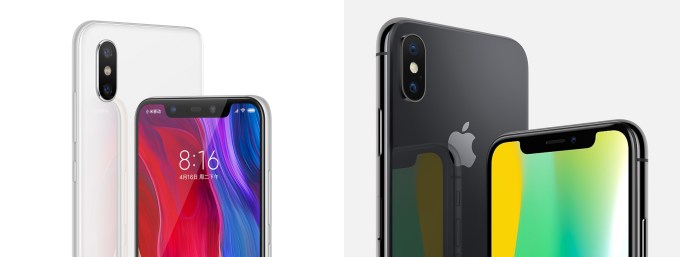
Xiaomi’s Mi 8 on the left, versus Apple’s iPhone X on the right
Even with its naming, Xiaomi has pulled an Apple. In the same way that Apple jumped to the iPhone X (10) to mark its tenth year as a phone-maker, so Xiaomi has gone from its previous Mi 6 mode to the Mi 8 to mark its eighth anniversary as a company.
Beyond the notch, the dual reverse cameras are near-identically placed, there’s a glass panel back and aluminum side frames. On the software side, even the placement of the telcom signal, power bar and WiFi signal indicator is identical to the iPhone X. The high-end Mi 8 model also includes iOS-like Animojis and a facial unlock feature both of which were pioneered by Apple with the iPhone X.
These similarities will inevitably irk Apple and design purists, but this isn’t Xiaomi’s first rodeo. With the Mi 8 it is doing what it does best, inviting comparisons to Apple and then packing impressive technology (and a price) that will draw favorable attention from its fans and those not keen to spend $1,000 on a phone.
A Xiaomi spokesperson declined to comment when we asked if the company wanted to talk about the Mi 8’s similarity to the iPhone X.
The Mi 8 packs a 6.21-inch AMOLED screen from Samsung which, within the notch, houses a 20-megapixel selfie camera and the infrared tech that unlocks the phone by scanning the user’s face. There’s an Apple-like dual camera array that features two 12-megapixel cameras.
On a more unique note, the device is one of the first in the world to ship with Qualcomm’s new Snapdragon 845 chipset which gives it some pzazz and (likely impressive) speed. It also uses dual GPS, which it claims makes location data more accurate.
Xiaomi said the phone will go on sale in China 5 and 8 June with three different versions offered. International expansion dates were not announced, as is common for Xiaomi. The standard Mi 8 will cost upwards of 2699 RMB ($420) with a smaller 5.88-inch size ‘SE’ model priced from 1799 RMB, or $280.
For those wanting more, the company also announced a souped-up ‘Explorer’ version that sports a pressure-sensitive finger scanner and the iPhone X-like facial unlock feature. In addition, the rear side is see-through which promises to be quite the look.
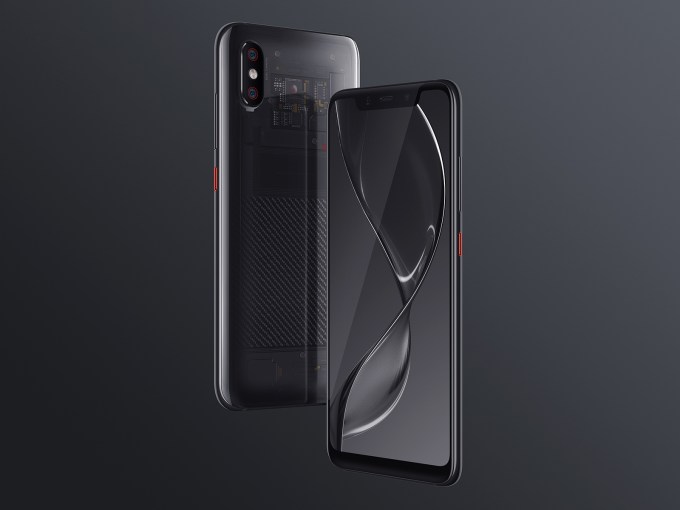
The Mi 8 explorer addition
Xiaomi is actively expanding into Europe after expanding into Italy, France and Germany but you have to wonder whether a device like the Mi 8 could grace the U.S.. Xiaomi currently sells accessories in North America where it recently hit go on its smart home products. CEO Lei Jun said recently that it might begin selling smartphones in the U.S. before the end of this year, but you’d imagine that certain Apple-like devices won’t be on the initial launch list if the timing goes according to plan.
That’s perhaps not a huge surprise since Xiaomi’s Redmi range — priced around $150 — has generated most of its sales, particularly in expansion markets like India.


from TechCrunch https://ift.tt/2IZJyPF
Subscribe to:
Posts (Atom)